Warm Up Your Winter Projects with Cozy Quilt Backgrounds
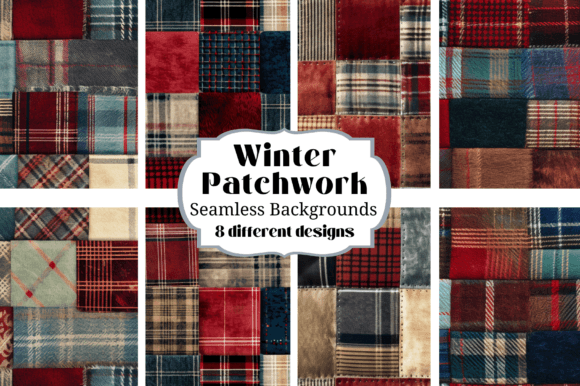
There is a specific kind of comfort that comes from seeing a patchwork plaid quilt, a warmth that translates perfectly into digital design. When you are working on projects that require a touch of homeliness, nostalgia, or rustic charm, finding the right texture is crucial. Standard geometric patterns often feel too cold or corporate. This is where the Winter Patchwork Plaid Quilt Backgrounds collection steps in. It offers a curated set of eight seamless patterns that capture the essence of hand-stitched flannel and cozy winter evenings. These are not just generic squares; they are carefully constructed digital assets designed to bring depth and personality to your creative work.
The Visual Character of Patchwork Textures
Understanding the visual language of these backgrounds is key to using them effectively. Unlike a standard digital font or a flat vector shape, a quilt texture implies history and effort. The "Winter Patchwork" style features the interlocking lines of tartan and plaid, but with the soft, slightly imperfect edges of woven fabric. This creates a visual hierarchy that is rich but not overwhelming. The colors typically associated with winter palettes—deep reds, forest greens, slate blues, and creamy neutrals—blend together to create a harmonious base.
What makes these design assets stand out is the seamless nature of the patterns. In digital design, tiling is often a headache. If a pattern does not align perfectly, the repetition becomes obvious and breaks the immersion. These files are engineered to tile flawlessly. Whether you are creating a massive banner for web design or a small swatch for packaging design, the texture flows endlessly without visible seams. This attention to technical detail ensures that the final product looks professional and polished, regardless of the scale of the project.
Strategic Applications for Designers and Creators
For entrepreneurs, marketers, and brand strategists, the utility of a high-quality texture extends far beyond simple decoration. These backgrounds are powerful tools for establishing brand identity. If your brand leans toward the artisanal, the handmade, or the comforting, a plaid quilt texture serves as an immediate visual shorthand. It tells the audience that your product or service is warm, reliable, and crafted with care. This is particularly effective for businesses in the lifestyle, home goods, or food sectors.
Content creators and bloggers will find these patterns invaluable for social media graphics. In a feed dominated by sleek, minimalist modern typography, a textured background stops the scroll. It adds a tactile quality to flat screens. Imagine a quote graphic for a winter sale; placing that text over a soft flannel background immediately evokes a seasonal feeling that a solid color cannot match. It provides context without the need for complex illustrations.
Furthermore, the application in editorial design and scrapbooking is obvious but worth exploring in depth. For those creating digital planners, junk journals, or card sets, the background sets the mood. These PNG files, with their high res 300 DPI quality, ensure that when you print your card making projects or book covers, the texture remains crisp. There is no pixelation or blurring, which is essential for maintaining the integrity of print work.
Integrating Texture with Typography
A common challenge in using busy backgrounds is maintaining readability. You cannot simply drop a complex script font or a delicate serif font onto a patchwork quilt and expect it to be legible. The key to successful font pairing here involves contrast and containment. Because the quilt background is organic and textured, your typography needs to be distinct.
Consider using a bold sans serif font for your headlines. The clean, geometric lines of a sans serif will stand out against the woven complexity of the plaid. If you are working on logo design for a winter market or a seasonal event, try placing your text inside a solid shape—like a circle or a rectangle—that sits on top of the quilt texture. This creates a "safe zone" for the eyes, allowing the texture to act as a frame rather than a distraction.
For scrapbooking and junk journal layouts, you might mix the background with other design assets like paper cutouts or tape strips. The quilt background acts as the "table" upon which you arrange your elements. When selecting a handwritten font to go with these backgrounds, look for one with thicker strokes. Thin, spidery handwriting will get lost in the fabric grain, whereas a robust, marker-style script will feel like it was written directly on the cloth.
Technical Specifications and Workflow
As a creative professional, your workflow relies on assets that are easy to use and versatile. This collection is delivered as a digital download, meaning you have instant access to the files without waiting for shipping. The files are provided as PNGs, which is the standard for high-quality raster images with transparency capabilities, though these specific backgrounds are designed to be opaque fills.
The 300 DPI resolution is the industry standard for premium font foundries and print shops. It ensures that your work translates from screen to paper without loss of quality. When you are designing a book cover or a flyer, this resolution provides the necessary data density for sharp printing.
It is important to note the licensing and usage rights inherent in these commercial font and asset packs. You are purchasing the right to use these images in your projects—whether personal or commercial. This means you can use them for client work, products for sale, or marketing materials. However, the digital files themselves cannot be resold as standalone assets. This protects the value of the original creation while giving you the freedom to build upon it. You cannot simply zip them up and sell them to someone else as a texture pack, but you can sell the T-shirt, the mug, or the invitation you design using them.
Evaluating Fit for Your Project
Before committing to a specific style, it helps to evaluate the "personality" of your project. Does it call for the ruggedness of a heavy wool, or the softness of flannel? The Winter Patchwork collection leans toward the latter, offering a gentler, more inviting aesthetic. This makes it ideal for family-oriented brands, cozy cafes, or winter holiday campaigns.
If you are working on a project that requires a modern typography focus, use the quilt pattern sparingly. Perhaps use it as a sidebar in a newsletter or a footer graphic on a website. This allows you to tap into the seasonal warmth without overwhelming a corporate or tech-focused layout. Conversely, for a craft fair poster or a bakery menu, you can let the pattern dominate the page, using the negative space of the plaid to guide the viewer's eye to the information.
Ultimately, the value of these backgrounds lies in their ability to tell a story. A solid color is neutral; a patchwork quilt is a narrative. It speaks of tradition, warmth, and the care of the maker. By incorporating these design assets