Post-Apocalyptic Watercolor Backgrounds for Gritty Design
The Aesthetic of Decay and Resilience
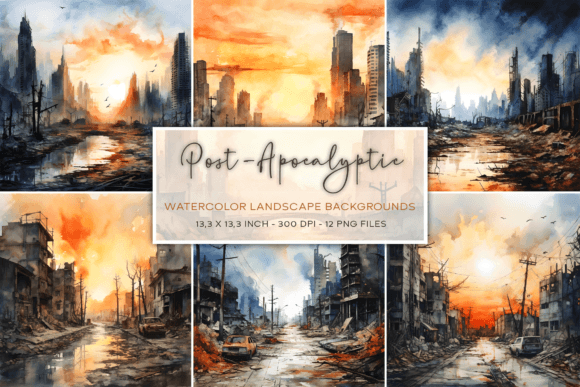
There is a specific mood in modern design that moves away from the pristine and perfect. It embraces the weathered, the textured, and the story-worn. This is where Post-Apocalyptic Watercolor Backgrounds find their power. This collection of 12 high-quality digital papers captures a unique visual language—one of beautiful decay, muted palettes, and atmospheric grit. It’s a style that speaks to resilience, raw emotion, and a narrative depth that polished graphics often lack. The appeal isn't in shock value, but in the texture and atmosphere these backgrounds provide, offering a sophisticated take on a genre often associated with chaos.
Visually, these backgrounds are a study in controlled imperfection. They blend the fluid, unpredictable nature of watercolor with the dusty, desaturated tones of a world reclaimed by nature. Imagine the soft bleed of ochre and ash, the subtle stain of rust, and the ghostly wash of faded concrete. The texture is paramount; you’re not just getting a color, but a tactile surface that suggests cracked earth, weathered paper, or stained metal. This isn't a flat digital gradient. It’s a landscape of texture that adds instant depth and authenticity to any project, functioning as a powerful display font for the visual world—a background that tells a story before a single word is read.
Practical Applications Across Creative Fields
The true value of these design assets lies in their remarkable versatility. For brand identity and logo design, they offer a way to build a narrative around a brand. A coffee roaster focusing on single-origin beans from resilient farms, an outdoor apparel company, or a boutique winery with a focus on terroir could use these textures to ground their identity in a sense of place and endurance. They work exceptionally well as subtle overlays in packaging design, adding a layer of tactile realism that elevates a product on the shelf.
In editorial design and publishing, these backgrounds are a secret weapon. They can transform a standard book cover into something immediately intriguing, perfect for genres like speculative fiction, thriller, or literary fiction with a gritty edge. For web design, a carefully chosen background from this set can set the tone for an entire site—ideal for a filmmaker’s portfolio, a documentary project page, or a blog focused on survivalist skills or dystopian analysis. The high-resolution 4000x4000 px and 300 DPI ensure crispness even when scaled or cropped for specific sections.
For social media graphics and digital content, these backgrounds cut through the noise. They provide a visually rich, textured canvas for quotes, announcements, or promotional posts that demand attention. Marketers and content creators can use them to establish a consistent, moody aesthetic across platforms. They are equally effective in print for scrapbooking, creating unique greeting cards, or designing standout notebook covers and phone cases. The included ZIP file makes it easy to integrate these assets into any digital workflow.
Integrating Texture into Your Design Strategy
Using a creative font like these backgrounds effectively requires a strategic approach. They are inherently expressive, so pairing them with typography is key. A clean, geometric sans serif font can create a striking contrast, letting the textured background breathe while maintaining modern readability. Conversely, pairing them with a rugged serif font or even a carefully chosen script font can deepen the narrative quality for specific projects. The goal is to create a visual hierarchy where the background enhances the message without overwhelming the foreground content.
Before committing, always test how the background interacts with your text and main graphic elements. Pull a sample of the texture and drop it into your working file. Does it support the mood you’re building? Does it allow your primary content to remain the focal point? Consider the color palette within the background; you can often pull accent colors directly from it to create a cohesive and professional color scheme for your entire project. This ensures consistency across all your design assets.
Finally, understand the licensing. This is a commercial font package, meaning it’s cleared for use in projects you create for clients, for sale, or for your own business marketing. This removes the guesswork and legal ambiguity that can come with using free resources. For designers, entrepreneurs, and creators, investing in a premium set of textures like this is about more than just the files—it’s about gaining a reliable, professional tool that adds significant value and a distinctive voice to your work. It’s a practical step toward building a more compelling and consistent visual portfolio.