Weathered Blue Wood Planks: Your Go-To Digital Background Asset
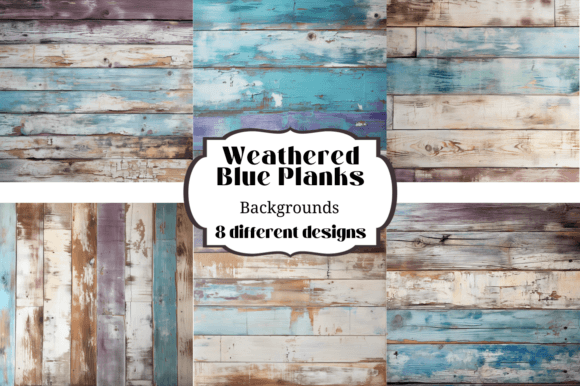
There’s a specific kind of texture that instantly grounds a design. It’s that feeling of history, of a surface that’s been touched by time and the elements. That’s the core appeal of these Weathered Blue Wood Planks Backgrounds. Imagine the faded, coastal charm of a beachside cottage’s siding or the sturdy, salt-bleached planks of an old fishing dock. This collection captures that exact aesthetic—8 distinct, high-resolution illustrations that bring a unique blend of rustic character and serene color to your digital toolkit.
Aesthetic & Personality: More Than Just a Texture
What sets these backgrounds apart is their specific personality. The "blue" isn't a flat, digital hue. It's a complex, weathered tone, suggesting layers of paint that have been kissed by sunlight and sea spray, revealing undertones of grey and natural wood grain beneath. Each of the 8 planks has its own story. You’ll find variations in the grain direction, the depth of the cracking, and the intensity of the weathering. Some planks show heavy, peeling paint revealing raw wood underneath, while others have a more uniform, sun-bleached patina.
This texture is inherently versatile. It feels both rustic and sophisticated. It can evoke a cozy, farmhouse vibe or a sleek, industrial-modern aesthetic depending on what you pair it with. It’s a premium font in the world of digital assets—meaning it’s crafted with detail and resolution that holds up to scrutiny. The 300 DPI PNGs ensure that whether you’re printing a large-format poster or zooming in on a web graphic, the texture remains crisp and authentic, without any of the pixelation or blurriness that plagues lower-quality assets.
Practical Applications: From Brand Identity to Personal Projects
So, where does a texture like this actually shine? The applications are broader than you might initially think, spanning both commercial and personal creative work.
For Branding & Marketing
A brand identity built around authenticity, craftsmanship, or a coastal lifestyle can use these planks as a foundational element. Think of a boutique coffee roaster, a handmade soap company, or a surf shop. The weathered blue background can serve as the canvas for your logo design, making the mark feel established and grounded. In packaging design, it can wrap around a product box or bag, giving it a tactile, premium feel on the shelf. For social media graphics, it’s a lifesaver. Use it as a background for quote cards, promotional announcements, or story templates to instantly create a cohesive, recognizable feed that stands out from the sea of sterile, generic templates.
For Publishing & Editorial Design
In editorial design, texture adds depth. These planks could be the background for a magazine’s feature article on coastal travel, sustainable living, or artisan crafts. For self-published authors, it’s a fantastic asset for creating book covers, especially in genres like romance, mystery, or historical fiction where a sense of place and atmosphere is key. Bloggers and content creators can use it to design custom headers, sidebars, or featured images that give their site a unique visual signature.
For Crafts & Personal Projects
This is where the asset truly comes alive for hobbyists. In digital scrapbooking, it provides the perfect backdrop for photos from a beach vacation, a DIY project, or a family gathering. For junk journal enthusiasts, it’s an instant, printable aged paper that can be used as a page base or a layered element. Card makers can use it to create stunning, textured backgrounds for birthday, thank you, or sympathy cards, adding a level of professionalism that’s hard to achieve with standard cardstock.
Making It Work: Integration and Pairing
Integrating a strong texture like this requires a bit of thoughtful pairing to ensure your message remains clear.
- Typography is Key: Because the background has high visual interest, your typography needs to be clean and legible. A bold, simple sans serif font like a geometric or grotesque style creates a striking modern contrast. For a more organic, harmonious feel, pair it with a sturdy serif font or a clean script font that has good readability. Avoid overly ornate or handwritten fonts with thin strokes, as they can get lost in the texture.
- Color Palette: Let the blue be your anchor. Pull colors from the wood grain—warm taupes, soft greys, and creamy whites—to build a neutral palette. Then, add a pop of a complementary color like a burnt orange or a deep mustard for emphasis. This creates a balanced, intentional look.
- Visual Hierarchy: Use the texture strategically. It doesn’t have to dominate the entire design. Consider using it in a header, a sidebar, or as a masked element behind text. Adding a semi-transparent overlay (a white or off-white shape at 70-80% opacity) can create a "safe zone" for text, improving readability while still letting the texture breathe.
Remember, these are high-resolution design assets. They are larger files because they are meant to be used at scale. The instant download gives you immediate access to the zip file containing all 8 separately named PNGs, making your workflow efficient. While you can use them freely in your personal and commercial projects (like the designs you create for clients or sell as products), the digital files themselves are licensed for your use and cannot be re-sold as-is. It’s a straightforward model that protects the asset’s value while giving you creative freedom.
In a digital world saturated with clean lines and minimalism, a texture with history and character is a powerful tool. These Weathered Blue Wood Planks Backgrounds